
Now Reading: Is Alice Springs Safe? Honest Aussie Safety Guide
-
01
Is Alice Springs Safe? Honest Aussie Safety Guide

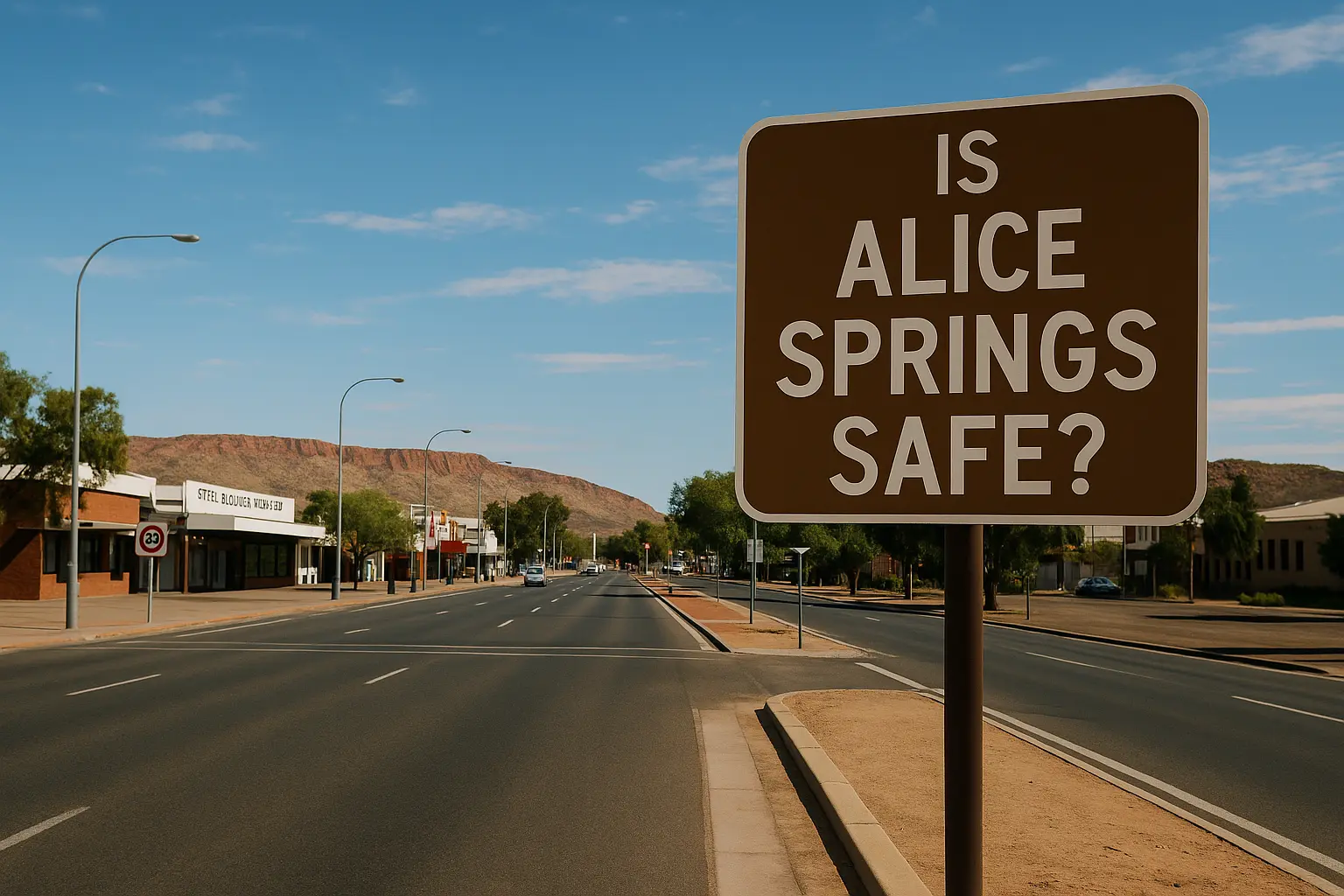
Alice Springs, in central Australia, is the gateway to famous outback sites. The town gets thousands of Aussie tourists every year because of its beautiful desert sunsets, the West MacDonnell Ranges and its unique Aboriginal culture. People keep asking online, “Is Alice Springs safe?”
The honest answer isn’t as simple as “yes” or “no”. It is safe to visit Alice Springs, but there are several things that visitors should know about before they arrive. This book tells Australians what they may realistically expect, what risks they should be aware of and how to keep safe while still having fun in the Red Centre.
What Alice Springs is really like today
Alice Springs is a small town in the middle of now here with about 25,000 people living there. Unlike big cities like Sydney, Melbourne or Brisbane, the isolation, harsh weather and complex social scene shape life here.
The town has many Indigenous people living there and a long history of culture, but it also has well-known problems with alcohol addiction, adolescent criminality, domestic violence and social poverty. These problems may not impact every street or tourist, but they significantly influence the overall safety discourse.
However, this does not preclude you from visiting Alice Springs. It indicates that people who are going there need to be alert, plan ahead and respect the local conditions.
Crime and safety: what the data shows
Data on crime in the Northern Territory and reports from the national level suggest that Alice Springs has higher rates of assault and violent crime per person than most other locations in Australia. This is especially clear when you look at big cities.
Alice Springs has also had high-profile events in the past few years that brought national attention to safety in the community. These things lead to things like curfews for teens and more police officers being around at particular times.
Tourism boards and municipal governments have both said publicly that they are aware of these issues. At the same time, they tell guests to be sensible travellers and take the same basic safety measures they would at any new place.
The overall picture is this:
- Crime rates are greater in Alice Springs than in most other Australian cities.
- After nightfall, things tend to happen more often.
- Violence due to alcohol is a known issue.
- Tourist areas during the day are usually safer.
This doesn’t mean you can’t visit, but it does mean you need to be ready.
Common safety concerns for visitors
When planning a vacation to Alice Springs, Australians usually ask about a few main risks:
Street safety at night
After dark, the town centre might seem very different. There are increasing reports of bad behaviour and fights late at night, especially around parks, liquor shops, and streets that aren’t well illuminated.
Theft and property crime
It’s common for cars to be broken into and things to be stolen from parked cars or places where people stay. If you leave valuables out in the open, tourists may try to steal them.
Alcohol-related violence
Many reported incidents involve alcohol. This normally happens between people who know one another, but it can also happen in public places, which makes some scenarios difficult to foresee.
Environmental dangers
People often forget about this. If you’re not ready, heat, dehydration, vast distances between amenities, wildlife, and remote roads can be just as dangerous as crime.
Is Alice Springs safe to visit? The balanced truth
Yes, it’s safe to visit Alice Springs, especially for Australians who know how to travel in rural and isolated areas. But it’s not the same as going to a big city on the shore.
In this way:
- During the day, it’s safer than at night.
- Planning is safer than rambling around without a plan.
- It’s safer to use well-known hotels and travel companies.
- It’s more dangerous if you don’t listen to local advice.
Usually, the people involved in serious situations are locals or people they know, not visitors. But sometimes it spills over into public places, which is why it’s important to be vigilant.
How to stay safe in Alice Springs
Follow these useful safety guidelines to have fun in Alice Springs without worrying:
Choose the right accommodation
Instead of staying in cheap, secluded places, stay at hotels or resorts that have favourable reviews. Safe parking and restricted access points make a tremendous difference.
Avoid walking alone at night
When it’s dark out, especially in calmer places, don’t walk; take a taxi or rideshare instead. When you’re out, stay in well-lit places with a lot of people.
Keep valuables out of sight
Don’t leave bags, cameras, or laptops in plain sight in your car. Lock the doors and windows, even if your absence is brief.
Plan your movements
If you can, arrive and leave throughout the day. If you plan to arrive late at night or depart early in the morning, please ensure you have arranged for transfers.
Follow local advice
Talk to hotel staff or tour guides about the current safety situation, areas to stay away from, and the ideal times to go around different sections of town.
Be outback-ready
If you’re driving outside of town, make sure you have enough water, sunscreen, a charged phone, and emergency supplies. Before travelling to remote regions, please inform someone of your plans.
Why Australians still visit Alice Springs
There isn’t an official “safe map” for tourists; however, based on what people have said:
Times that are safer:
- From early morning until late afternoon
- Tourist seasons that are busy and full of action
- When going in groups
More cautious times:
- Late at night and early in the morning
- Parks and streets that are quiet
- Remote areas without planning
Staying in well-known tourist areas, going on guided excursions and staying in central areas greatly lowers the danger.
Is Alice Springs safe for families and older travellers?
Families, older Australians and people travelling alone often want to know if Alice Springs is a suitable place for them. Yes, with some planning.
There are many caravan parks, resorts and tour companies that focus on making their trips fun for families and seniors. If you stay in these kinds of places and stay away from nightlife areas late at night, your trip will usually be comfortable and fun.
The role of media and reputation
One reason Alice Springs has the notoriety it does now is because of how the national media covered important events there. These stories are based on genuine events, although they don’t show what every visitor does every day.
Alice Springs is like many other small towns in the area that are having social problems. It’s not as scary as some headlines say, but it’s also not as carefree as some brochures say.
The key to feeling safe while travelling is knowing how to reach equilibrium.
Conclusion
Alice Springs can still be a wonderful place to visit for Australians who like adventure, nature and learning about new cultures.
You must be more alert in town than at the beach or in a city. Many Australians still come and explore the Red Centre every year without any problems, as long as they plan ahead, stay in safe places and act responsibly.