
Now Reading: Bradley Edwards: The Claremont serial killer explained
-
01
Bradley Edwards: The Claremont serial killer explained
Bradley Edwards: The Claremont serial killer explained

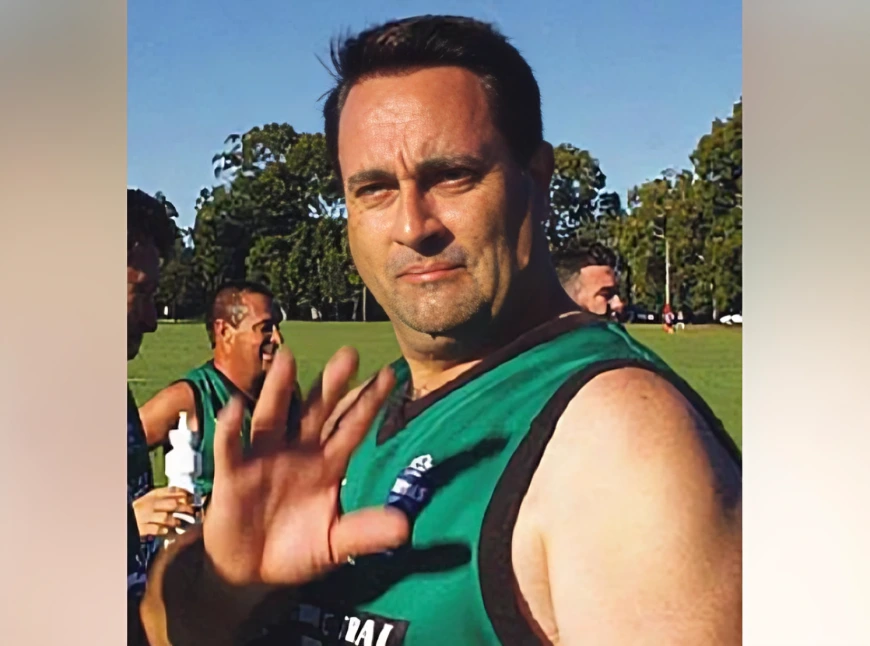
Bradley Edwards’s name is now synonymous with one of Australia’s most notorious criminal cases. For those in Western Australia, it conjures up years of dread, lingering mysteries, and a cold-case investigation that would become one of the most intricate in the nation. The Claremont serial killings, a grim period in Perth’s past that unfolded in the 1990s, and the subsequent arrest and conviction of Edwards in 2016, represented a watershed moment for contemporary Australian law enforcement.
In thhis article we discuss who Bradley Edwards was, the crimes he committed, why he managed to stay hidden for so long and the lasting effects of his actions on Australia.
Who Is Bradley Robert Edwards?
Bradley Robert Edwards was born in 1969 and grew up in Western Australia. Before his arrest, Edwards lived a relatively normal life in Perth’s southern suburbs, working as a telecommunications technician. To the people in his life, the neighbours, the colleagues, even those he’d only exchanged pleasantries with, he appeared to be just another Australian bloke. He had a job, kept to himself and generally avoided the spotlight.
Behind that facade, however, investigators later uncovered a long history of violent sexual offences dating back to the late 1980s. These offences would ultimately link him to one of the most disturbing crime sprees in Australian history.
The Claremont serial killings: what happened?
From January 1996 to March 1997, three young women vanished after nights out in Claremont, a bustling entertainment district in Perth.
The Victims
- Sarah Spiers, just 18, went missing on January 27, 1996.
- Jane Rimmer, 23, disappeared on June 9, 1996.
- Ciara Glennon, 27, went missing on March 14, 1997.
All three women were last spotted near taxi ranks or well-known locations after enjoying nights out with friends. Their disappearances shared unsettling similarities, immediately raising fears of a serial offender. The remains of Jane Rimmer and Ciara Glennon were ultimately discovered in secluded bushland south of Perth. Sarah Spiers’ body has never been found, and she is presumed deceased.
A community gripped by fear
During the mid-1990s, Perth was shaken. The idea that a predator was operating in a well-lit, affluent suburb challenged assumptions about safety in Western Australia. Women altered their behaviour, parents feared for their children, and nightlife in Claremont changed dramatically.
Police initiated Operation Macros, a sprawling and costly investigation that became one of the most significant in the history of the WA Police. Thousands of men were interviewed, countless tips were followed, and forensic evidence was examined, yet the case went cold.
Earlier crimes linked to Edwards
Long before the Claremont murders, Bradley Edwards had already committed violent crimes:
- 1988 Huntingdale rape: A woman was sexually assaulted in her home. DNA evidence was preserved.
- 1990 hospital attack: A social worker was violently assaulted at a Perth hospital.
- 1995 Karrakatta Cemetery attack: A 17-year-old girl was abducted and raped.
At the time, these offences were not conclusively linked. A significant limitation was the lack of advanced DNA technology, which prevented the linking of evidence across different cases.
The Breakthrough: How Bradley Edwards was caught
Nearly two decades had passed, and forensic science had undergone a revolution, reshaping the very foundations of investigation. By the mid-2010s, cold case detectives were revisiting old evidence, utilising cutting-edge DNA testing methods. A key piece of evidence was a silk kimono discovered at the 1988 Huntingdale crime scene. After further analysis, the DNA profile matched the biological material found on Ciara Glennon. This connection led to Bradley Edwards being watched. In December 2016, police collected discarded items containing his DNA. The match was conclusive.
Bradley Edwards was arrested on 22 December 2016 and charged with multiple offences, including the Claremont murders.
Sentencing and Imprisonment
Bradley Edwards was sentenced to life in prison in December 2020. The judge characterised his offences as premeditated, predatory, and involving extreme violence. This sentence suggests Edwards will probably remain behind bars for the rest of his life, offering some semblance of justice to the victims and their loved ones.
Why the Bradley Edwards case matters in Australia?
The Edwards case is important for a few key reasons.
1. Cold case justice
First up, Cold Case Justice. It shows that, with grit and the right resources, it’s possible to solve cases that have been sitting unsolved for ages.
2. DNA and forensic advances
Next, the DNA and forensic advances. This case highlights how forensic evidence can still be incredibly valuable, even after a long time has passed.
3. Impact on policing
The Western Australia Police undertook a comprehensive reassessment of their investigative methods, evidence preservation procedures, and the allocation of resources to unsolved cases.
4. Societal impact
The Western Australia Police conducted a thorough review of their investigative techniques, how they handled evidence, and how they allocated resources to cold cases.
Conclusion
Bradley Edwards is not just the man behind the Claremont serial killings; he represents a defining chapter in Australian criminal history. His crimes shattered lives, traumatised a city, and tested the limits of investigative policing. Yet his eventual capture and conviction also demonstrated resilience, scientific progress, and an unwavering pursuit of justice.
The Claremont case will continue to be studied, discussed, and remembered not only for the crimes committed but for what it taught Australia about perseverance, accountability, and the long road to truth.