
Now Reading: Hells Angels Adelaide: history, law and public impact
-
01
Hells Angels Adelaide: history, law and public impact
Hells Angels Adelaide: history, law and public impact

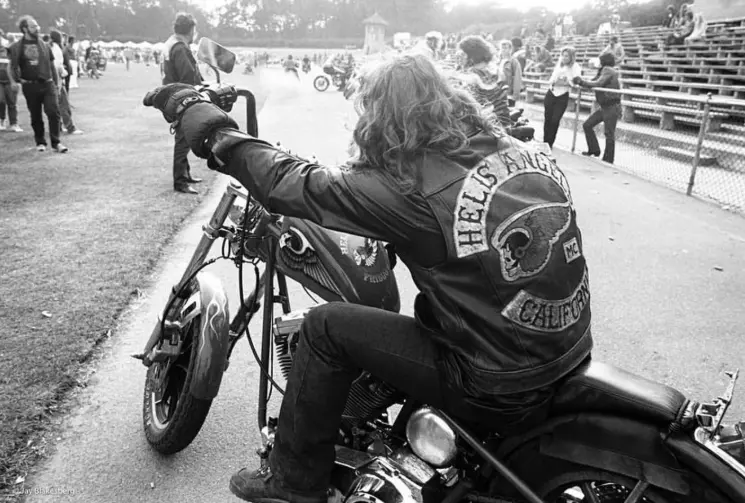
The name Hells Angels often sparks strong reactions across Australia. The topic of Hells Angels Adelaide has been part of public discussion in South Australia for decades. For some, it evokes images of leather jackets and roaring Harleys; for others, it raises questions about law enforcement, public safety and organised crime. In Adelaide, the topic has attracted attention for decades, making it one of the most discussed outlaw motorcycle clubs in South Australia. Here, we provide a neutral, informative look at Hells Angels Adelaide, written specifically for an Australian audience.
What is the Hells Angels Motorcycle Club?
Hells Angels Motorcycle Club is one of the world’s most recognisable motorcycle clubs. This club was founded in California in 1948. The organisation has expanded globally, including a longstanding presence in Australia. While the members often describe the club as a brotherhood built around motorcycles and loyalty, law enforcement agencies across Australia classify the Hells Angels as an outlaw motorcycle gang. And this classification is based on intelligence, which links chapters to organised crime activities rather than merely motorcycle rides.
History of Hells Angels in Adelaide
In the 1970s, Hells Angels chapters began appearing in Australia, initially forming in major cities. The chapter extended throughout Europe, Australia and other regions of the world. Local conditions, legislation and enforcement techniques create Australian chapters, which have the same global identity as international organisations. This is especially important in Adelaide, where state-specific legislation plays a large influence.
The Hells Angels’ presence in Adelaide
Adelaide has long been home to various motorcycle clubs, both lawful and outlaw. The Hells Angels Adelaide usually means a recognised chapter operating within South Australia under the broader international structure.
A local chapter typically includes:
- A president and senior office bearers
- Full-patched members and prospects
- Strict internal rules and codes of conduct
- Controlled membership entry
Clubhouses, when they exist, are often discreet and closely monitored by police.
Law enforcement response in South Australia
South Australia has taken a strong stance against organised crime, including outlaw motorcycle gangs.
Police monitoring and task forces
SA Police maintain specialist units that focus on surveillance of outlaw motorcycle gangs, disrupting organised criminal networks and monitoring financial activity and associations. Hells Angels Adelaide, like other OMCGs, falls under ongoing intelligence gathering rather than constant public confrontation.
Bikers and anti-association laws
South Australia introduced anti-association and serious organised crime laws aimed at reducing the influence of groups such as the Hells Angels. These laws allow authorities to restrict meetings between known members and target declared organisations. These legal measures have significantly reduced the public visibility of bikie clubs in Adelaide.
Allegations and criminal associations
Australian police have accused many outlaw motorcycle clubs, including the Hells Angels, of drug trafficking, firearms crimes and violent clashes with rival clubs. It is crucial to note that membership alone is not a criminal offence and not every member is convicted of a crime. However, the organisation as a whole remains under scrutiny.
How Adelaide compares with other Australian cities
Compared with cities like Melbourne, Sydney or Brisbane:
- Adelaide has a smaller number of active bikie chaptersx
- Activity tends to be lower-profile
- Law enforcement is more preventative than reactive
This does not mean the Hells Angels are absent from South Australia, but rather that operations are quieter and more regulated.
Impact on the wider Adelaide community
For the average South Australian, direct interaction with outlaw motorcycle clubs is rare. Most confront the topic only through the news media, political debate and occasional police announcements. Daily life in Adelaide, from commuting to work to attending festivals and sporting events, is generally unaffected.
Why Hells Angels Adelaide remains a topic of interest
The ongoing interest in Hells Angels Adelaide comes from a mix of factors theri global reputation, strong government response, media attention and public curiosity about outlaw culture. In a city that is famous for its relaxed lifestyle and cultural events, the contrast makes the topic especially compelling.
Conclusion
Hells Angels Adelaide is best understood through facts rather than fear. While the organisation is closely monitored due to alleged links with organised crime, its presence in South Australia is shaped heavily by strict laws and energetic policing. Whether viewed as a symbol of rebellion or a law enforcement challenge, the presence of Hells Angels in Adelaide continues to be part of the city’s modern history.